Caitlin Long, CEO of Custodia Bank, delivered a performance that would make Shakespeare blush when explaining why Ripple’s crypto dreams won’t ride the Fed’s rails. Spoiler: Trust companies aren’t depository institutions. Surprise, surprise. 🤷♂️
“Stablecoin issuers are not legally depository institutions,” she said, as if this were a revelation. “To use Fedwire and ACH, you’ve gotta be a depository institution… A trust company is legally prohibited from accepting a US dollar deposit.” Oh, and the “par guarantee”? That’s for banks only. “You’ve got to legally be a depository institution,” she insisted. “I firmly do believe… the Fed is not going to change that.” Translation: Good luck, crypto. You’re not invited to the Fed’s VIP lounge. 🚪
Long’s rant comes as Ripple tries to flex its bank-grade muscles. In June 2024, they bought Standard Custody & Trust Company, positioning it as the “hub” for their stablecoin stack. Cute. But if you think the Fed will hand them a master account just because? Yeah, no. 💸
In July 2025, Ripple applied for a US national bank charter and a Fed master account-moves that would let Ripple USD (RLUSD) cozy up to the Fed’s balance sheet. Long’s response? “Trust status is an ‘intermediary stop.’” Translation: It’s not the final destination. “The stablecoin market, I firmly believe, will go entirely to the banks.” Oh, here we go again. 🏦
The Fed’s legal framework? It’s about as clear as my relationship with my ex-wife’s new yoga instructor. In August 2022, the Board finalized its Account Access Guidelines, which basically said: “We’re evaluating your request for a master account, and no, you’re not special.” Non-insured, novel charters? Get ready for a third-degree interrogation. 🕵️♂️
The Fed defines a master account as “the record of financial rights and obligations” between you and your Administrative Reserve Bank. Fancy way of saying: It’s the ledger that lets you settle at par on Fed rails. Courts have also said the Fed can say “nope” even to legally eligible institutions. Precedent set in 2024? Yeah, the Fed’s got the power. 🤝
Long, ever the legal expert (I’m not a lawyer, but I play one on TV), named names: Kraken Financial, Protego Trust, Standard Custody & Trust (Ripple-owned), and WisdomTree Digital Trust. All trying to squeeze into the Fed’s system. But guess what? “All these trust companies… are not eligible to get access to the payment system for moving US dollar deposits.” Oops. 🙄
Her argument? First principles, not policy mood. “What is a depository institution? It’s a financial institution that’s legally authorized to accept a US dollar deposit.” Trust companies can’t do that. So, they’re “intermediary stops.” Great for doing business nationwide without 50 money-transmitter licenses. Not so great for moving money on Fedwire/ACH. 🚧
In Long’s world, stablecoin issuance will consolidate “entirely” inside banks. Some may be crypto-founded, but they’ll be banks. Only banks can tap the Fed’s par-clearing privilege at scale. For Ripple? The path is binary: Either become a bank or keep playing with trust-company architecture. 🎲
Ripple’s pivot to a national bank charter and master-account application? A masterstroke or a desperate Hail Mary-depends on who you ask. But let’s be real: The Fed’s risk-based scrutiny tripped up other applicants. Good luck with that. 🎭
Long’s bottom line? “The value of moving money in the payment system? It’s the par guarantee.” And that’s not for trust companies. Unless they become banks. Which Ripple isn’t. Yet. 🧾
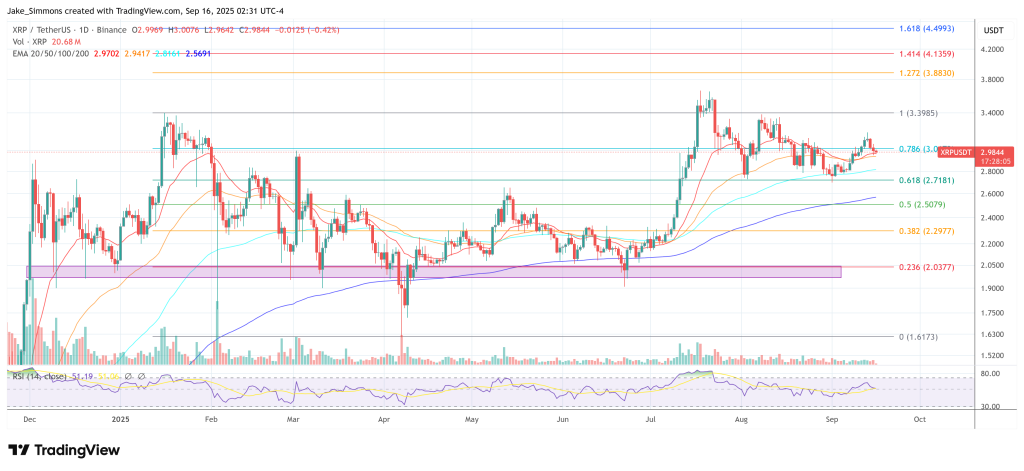
At press time, XRP traded at $2.98. Coincidence? I think not. 💸
Read More
- Silver Rate Forecast
- Gold Rate Forecast
- Brent Oil Forecast
- USD THB PREDICTION
- Bitcoin Plummets Below $98K: Fear Grips Market Like a Bad Soap Opera 🎭
- 7-Year-Old Crypto Tycoon Ditches Bitcoin for Ethereum: A Tale of Digital Fortunes 🤑💰🚀
- DOGE’s Wild Ride: Whales, Flags, and Golden Crosses 🌊🚀
- Bitcoin’s Bizarre Bull Run: ETFs, Elves, and Explosive Tokens! 🚀
- Bitcoin Wakes Up, Pretends It Has Its Life Together ✨📉🚀
- You Won’t Believe This Cryptic Cash Crunch! 😲💸
2025-09-16 15:40