Well, well, well. The XRP Ledger’s BatchGate incident has really opened up a can of worms, and not the good kind. What began as a minor scare over a flawed amendment-XLS-56, or “Batch”-has exploded into a full-fledged argument over who’s really in charge of keeping the ledger safe and how much red tape should be around big updates before they even think about seeing the light of day on the mainnet.
Daniel Keller, a veteran validator operator, took to the stage Monday to throw his two cents into the ring. In his public statement, he called out what he saw as a major flaw in the review process, explaining that the near-miss with XLS-56 had him pulling support for all amendments currently on the table. That’s right, folks-one bad scare and he’s out. No more “Yay” votes from him until things get sorted out.
In his rant, Keller emphasized that dUNL validators are not some unpaid army of code auditors. Nope, not their job, never was. “We’re here to say ‘Yay’ or ‘Nay’ to proposed amendments, not to review every line of code that gets thrown at us,” Keller wrote. So if you want my vote, prove your change is safe and sound, or don’t bother asking.
And why, you ask? Well, because XLS-56 (Batch) could’ve been a real disaster. If that bug had gone unnoticed, it could’ve opened the floodgates to unauthorized transactions, potentially risking billions of dollars. Luckily, it was caught just in time. But, you know, “just in time” doesn’t sound too reassuring when we’re talking about billions, does it?
The Ripple Effect: Security, Governance, and Ripple’s Responsibility
But this isn’t just about one embarrassing bug. No, no. Keller sees the whole situation as a symptom of a deeper problem-one that’s been lurking in the XRP Ledger for far too long. He’s not here to babysit code, he’s here to vote. The validators aren’t free, all-knowing auditors-this is not some amateur hour operation. If Ripple wants his vote in the future, they better pony up for real, documented security checks, testing, and formal proofs of safety. Don’t just throw a change at the wall and hope it sticks.
And guess what? Keller’s not backing down. He’s calling on Ripple to step up and put its money where its mouth is. If XRP is truly Ripple’s “North Star,” as they like to say, then it’s time for Ripple to pour some serious cash into the security and sustainability of the core protocol. No more half-hearted attempts.
His response? A quick and dirty “no more ‘Yay’ votes”-except for fixes, of course-until Ripple shows they’re ready to invest in the network’s future. He also wasn’t shy about pointing out how thin the current safety net is, considering that an AI tool and an independent researcher had to step in to save the day. No pressure, right?
Of course, not everyone agrees with Keller’s take. Other voices in the XRP community are all for a rethink of how things go down, but some want a slower pace for updates, more paid reviews, and big bug bounty programs that could lure in some serious talent. The problem with that, Keller argues, is that you can’t just keep pushing back deadlines. It took years to get here, and they’re still moving too slow. The solution? More resources, and fast. Yesterday, if possible.
In the end, the XRP Ledger finds itself in a familiar bind: trying to innovate and evolve while keeping the integrity of its base layer intact. BatchGate didn’t turn into a full-blown crisis, but it did raise an important question-are we reviewing updates carefully enough to handle the scale of change that’s on the horizon?
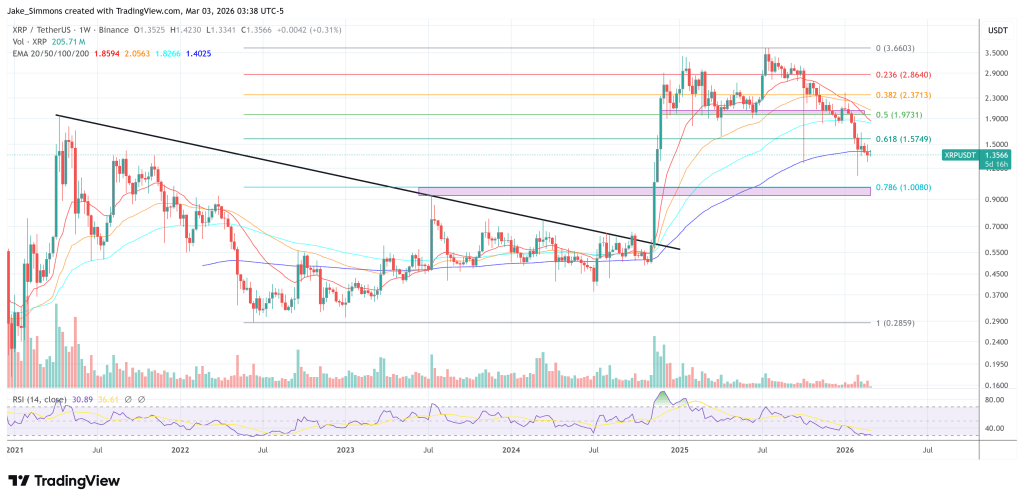
As of now, XRP is hanging steady at $1.3566, but that could change faster than you can say “systemic failure.”
Read More
- USD COP PREDICTION
- Silver Rate Forecast
- SOL PREDICTION. SOL cryptocurrency
- SPX PREDICTION. SPX cryptocurrency
- Brent Oil Forecast
- USD CAD PREDICTION
- Gold Rate Forecast
- BNB PREDICTION. BNB cryptocurrency
- When 4.6 Million Bones Get Frozen: Shiba Inu’s Latest Crypto Soap Opera 🐕❄️
- USD BRL PREDICTION
2026-03-03 17:11