The U.S. Bureau of Labor Statistics will publish February’s jobs report, known as Nonfarm Payrolls, at 8:30 AM Eastern Time (13:30 GMT).
Expect more fluctuations in the value of the US Dollar when the latest employment report is released. Investors will be closely watching for clues about what the Federal Reserve might do with interest rates, particularly because the situation in the Middle East has increased worries about inflation.
What to Expect From the Next Nonfarm Payrolls Report?
Experts predict job growth will continue, with the economy adding 59,000 jobs after a strong increase of 130,000 last month. The unemployment rate is expected to stay at 4.3%, and wages are forecast to rise by 3.7% compared to a year ago.
According to TD Securities analysts, the upcoming jobs report is expected to show a slowdown in hiring, with job gains around 90,000 for February.
Healthcare gains were particularly strong last month, so we anticipate a slowdown in overall growth. We estimate private sector jobs increased by 100,000, while government jobs likely decreased by 10,000. The unemployment rate is expected to remain at 4.3%, although there’s a possibility it could rise to 4.4%. We also predict wage growth will ease to 0.2% month-over-month, or 3.7% year-over-year.
New data from the US suggests the job market remained fairly strong in February. A key measure from the Institute for Supply Management showed a slight improvement, even though manufacturing is still slowing down. Additionally, private companies added 63,000 jobs, more than economists had predicted.
The ISM Services PMI report showed increased hiring in the service sector, with its Employment Index climbing to 51.8 from 50.3, indicating a faster rate of job growth.
How Will the US February Nonfarm Payrolls Affect EUR/USD?
Following a joint military action by the US and Israel against Iran, the US dollar has strengthened as investors sought safe investments. This has led to a significant drop in the value of the euro against the dollar.
This week, the US Senate voted down a proposal that would have required President Trump to get Congress’s permission before taking further military action against Iran. CNN also reported a senior US official stating the US is beginning operations that could extend further into Iran, though these operations are currently in their initial stages.
Investors are carefully watching how the situation in the Middle East affects energy prices, as this could change expectations for inflation. Following the recent escalation involving the US and Iran, the likelihood of the Federal Reserve holding interest rates steady at its next three meetings has increased significantly, rising from around 50% to almost 70%, according to data from the CME FedWatch Tool.
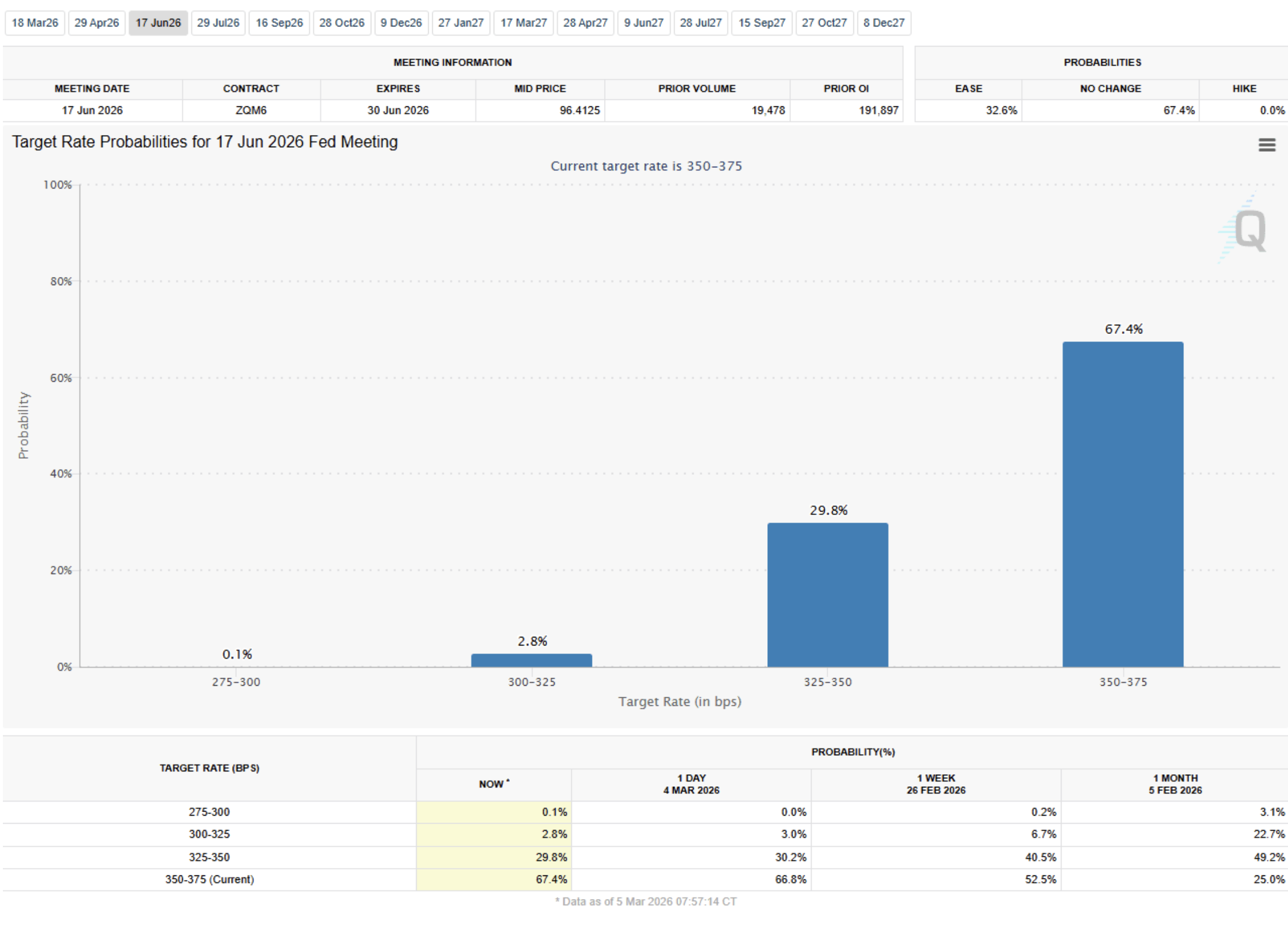
Neel Kashkari, head of the Federal Reserve Bank of Minneapolis, recently stated at the Bloomberg Invest Conference that it’s currently unclear how the conflict in Iran will affect inflation. However, he noted that the situation could potentially influence the Fed’s decisions about monetary policy.
If the jobs report (NFP) shows an increase of 70,000 or more, and unemployment stays at the expected 4.3%, the market might see that as enough positive news for the Federal Reserve to hold off on lowering interest rates until later in the year. If that happens, the U.S. dollar could get stronger, potentially causing the euro to fall in value against it.
Investors would likely only start expecting interest rate cuts in June if the next jobs report (NFP) is surprisingly weak – showing job growth of 30,000 or less – and the unemployment rate also rises.
However, the US dollar’s decline might not be significant unless tensions in the Middle East ease. The worst-case scenario for the dollar – and the best for the euro – would be a drop in oil prices, a return to normal shipping activity in the Strait of Hormuz, and a weak jobs report showing the labor market is weakening.
Analysts at Societe Generale predict a strong jobs report, noting that recent indicators of the US labor market have consistently shown positive results.
Given the current situation, it’s unlikely that positive economic data will significantly boost stocks and currencies (and weaken the dollar). We believe a job gain between 30,000 and 70,000 wouldn’t have much impact. Instead, we think how oil and natural gas prices finish the week will be the main driver of market movement.
As a session lead analyst here at FXStreet, I’m providing a quick technical assessment of where EUR/USD currently stands.
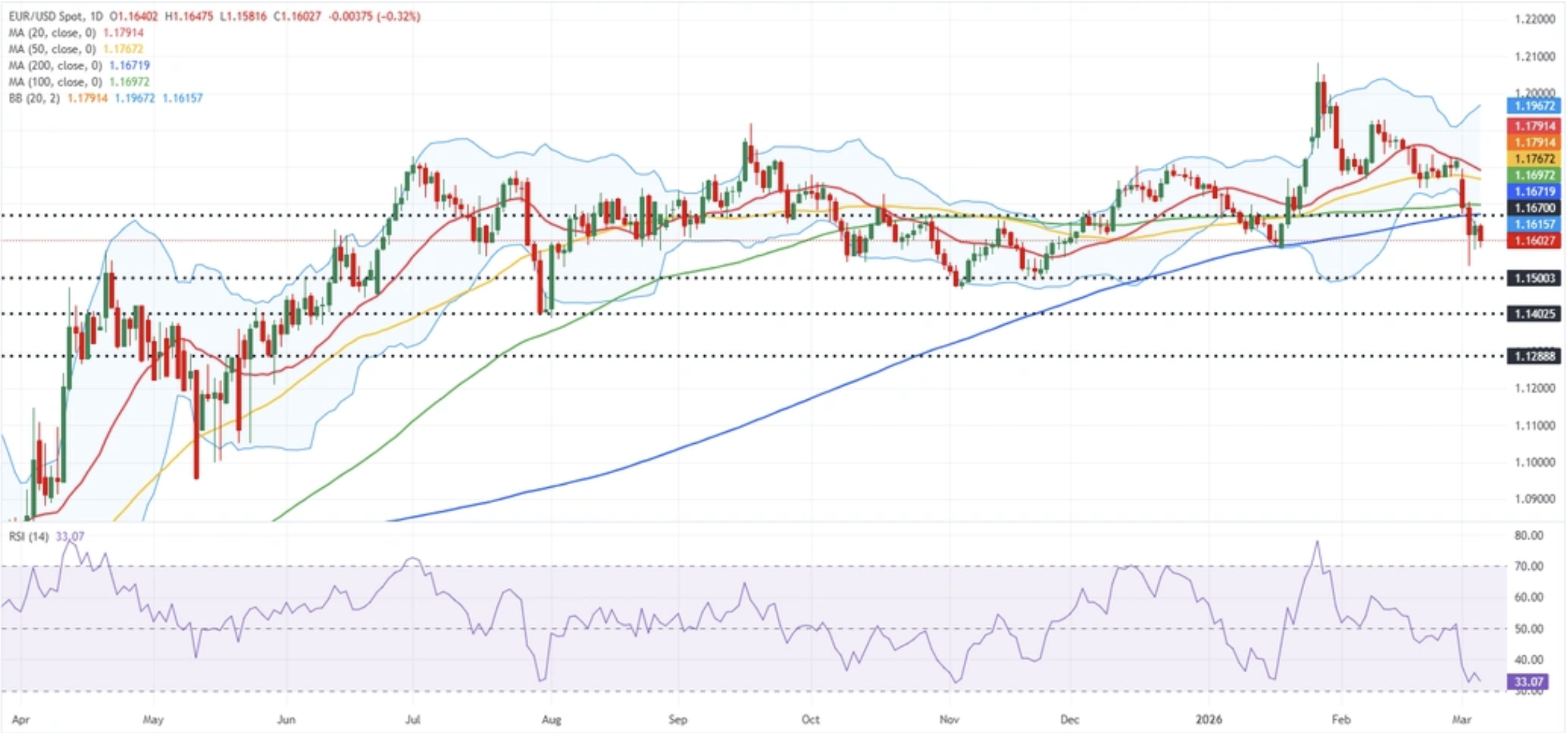
EUR/USD is currently looking weaker in the short term. It recently closed below its 200-day moving average – something that hasn’t happened in a year – and its RSI has fallen below 40, both of which suggest potential further declines.
The currency pair currently finds initial support around 1.1500, followed by stronger support at 1.1400 and then 1.1300-1.1290. On the rise, a key resistance zone has developed between 1.1670 and 1.1700. To attract more buyers, the price needs to break above this level and hold steady. If it does, the next resistance point to watch is the 50-day Simple Moving Average around 1.1770.
Read More
- USD COP PREDICTION
- Silver Rate Forecast
- SOL PREDICTION. SOL cryptocurrency
- SPX PREDICTION. SPX cryptocurrency
- Brent Oil Forecast
- SEC’s Quantum Quandary: Is Your Bitcoin Bristling with Risk?
- Gold Rate Forecast
- XRP’s Great Stalemate: Bulls vs. Bears 🧠💥
- UFC & Polymarket: Fists, Foresight, and Frenzy!
- USD THB PREDICTION
2026-03-06 14:13